Too Tired to Work Out After Work? Your Muscles Probably Aren't
A long day of meetings and screens makes training feel harder than it is. What the mental fatigue research says, and how to plan a session that survives it.
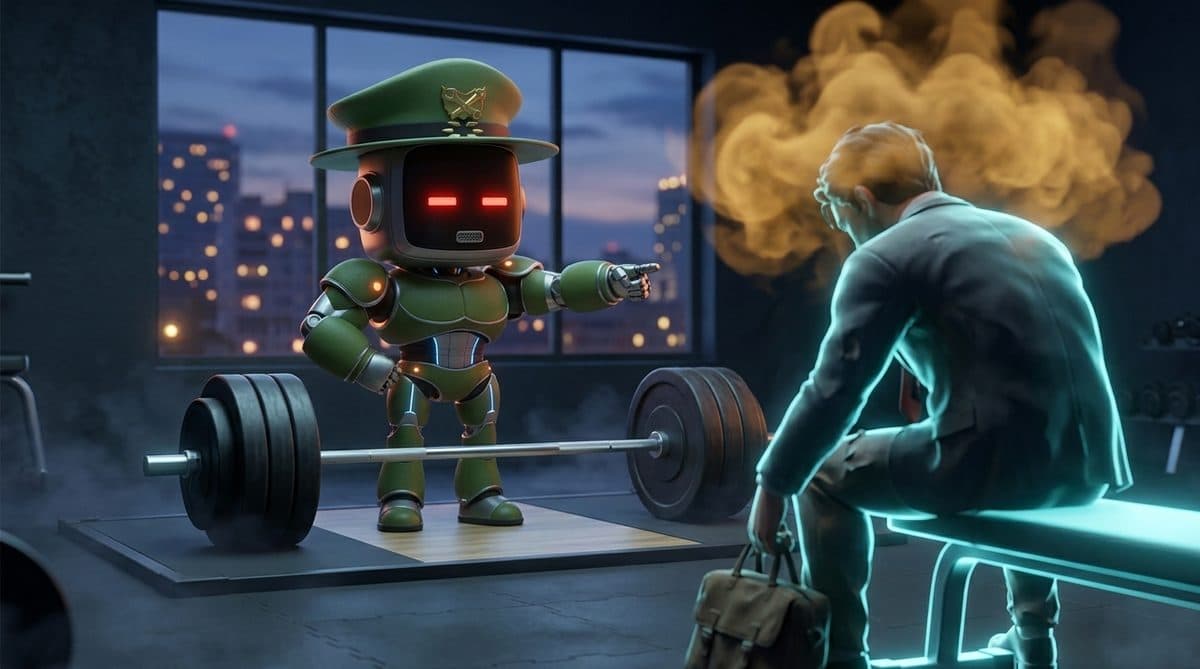
You pull into the gym's parking lot, turn the engine off and don't get out. The bag is on the passenger seat, the plan says deadlifts, and your head is still in the 4 pm budget meeting after eight hours of calls, spreadsheets and Slack. You sit there answering one more message, telling yourself you're deciding. Then you start the car again and go home.
If you are often too tired to work out after work, the tiredness is real, but it is probably in a different place than you think. Research on mental fatigue suggests a long day of focused thinking mostly changes how hard exercise feels, while your muscles have a lot more left than they're letting on. That difference decides what kind of session still makes sense.
By the end of this piece you'll know when to train anyway, which parts of a workout survive a draining day and which don't, and a simple after-work plan for the evenings when the parking-lot debate starts.
Should you work out when you're too tired after work?
Most of the time, yes, with a few changes. If the tiredness comes from a day of mental work (meetings, deadlines, a screen you've stared at since 9 am), a shorter session built around your heaviest sets is usually a good call. The short version:
- Train, but adjust: you feel foggy, unmotivated or flat after a long workday, and you slept roughly normally last night.
- Train lighter or swap for a walk: you've slept badly for two or three nights in a row, or you're sore and stiff from a hard session yesterday.
- Skip it: fever, chest congestion, dizziness, sharp or unusual pain, or weeks of feeling run down that rest days don't fix. That last one is worth a conversation with a doctor.
The rest of this article explains why the first category is so common, and why it responds well to the right kind of workout.
What a long workday does to your workout
The cleanest test of this idea came from Samuele Marcora and colleagues in 2009. In their study in the Journal of Applied Physiology, 16 people spent 90 minutes either on a demanding computer task or watching neutral documentaries, then cycled to exhaustion at a hard, fixed intensity. After the mental task they quit sooner: about 640 seconds on average versus 754, roughly 15% less.
The interesting part is what didn't change. Heart rate, blood lactate and the other physiological markers looked largely the same in both conditions, and the riders said they were just as motivated. The only clear difference was perceived effort. Every minute felt harder after the mental task, so people hit their personal "I'm done" level earlier.
That matches the parking-lot feeling well. Your legs haven't done anything all day. What has been used up is your appetite for effort, and that is what makes the drive home look so reasonable.
Does mental fatigue affect strength?
This is good news for anyone who lifts. A 2017 systematic review in Sports Medicine by Jeroen Van Cutsem, Marcora and colleagues pulled together the controlled studies at the time and found that maximal strength, power and short anaerobic efforts were not affected by prior mental fatigue. Endurance performance was, and the main reason was again a higher sense of effort.
A larger 2020 meta-analysis by Denver Brown and colleagues, covering 73 studies and about 2,600 participants, adds a useful detail. Prior mental work hurt sustained and repeated efforts, including holding a contraction or grinding out reps on a resistance task (effect sizes around -0.5). Short, maximal anaerobic efforts showed essentially no effect.
Put together, the pattern is consistent: the shorter and heavier the effort, the less a fried brain matters. A set of three heavy deadlifts is over before effort perception has much say. A set of 20 goblet squats, a long plank or a 15-minute conditioning finisher is where a hard day shows up.
Where the evidence is weaker
The size of the effect is still argued about. A 2020 bias-sensitive meta-analysis by Darías Holgado and colleagues found signs that studies showing a big effect were more likely to get published. After correcting for that, the estimated hit to exercise performance shrank to close to zero, and the authors concluded the evidence wasn't conclusive.
Two other caveats. Lab studies usually create mental fatigue with 30 to 90 minutes of a single tedious task, which isn't the same as a real workday with stress, bad lunches and a commute. And none of this covers sleep loss, which is a different problem; if your evening slump follows a short night, adjusting the session with RPE and reps in reserve is the better tool.
The practical takeaway doesn't depend on who wins that argument. If mental fatigue barely matters, you lose nothing by training. If it matters, it mostly affects long and grinding work, which you can move or cut.
How to work out when you're too tired after work
The goal is a session that a drained version of you will still start, with the work ordered so that the part fatigue barely touches comes first.
- 1.Decide before 3 pm. Pick the session at lunch, when you still have energy for decisions. Write down the first exercise, the weight and the reps. A tired brain at 6 pm will take the default, so make the default the workout.
- 2.Don't go home first. If you train at a gym, go straight from work. If you train at home, put your shoes and the first weight out in the morning so the setup is done.
- 3.Promise yourself only the warm-up and one work set. Five minutes of easy movement, a few ramp-up sets, then one real set. After that you're allowed to leave. Most nights you won't, because the hardest part, getting started, is already behind you. Our guide on how to warm up before lifting has a quick routine.
- 4.Heavy and short first. Start with your main lift in the 3 to 6 rep range, resting 2 to 3 minutes between sets. This is the work the research says holds up best.
- 5.Cut the grind. Drop the high-rep finisher, the long circuit or the extra accessory. Two hard sets of one accessory beat four half-hearted ones. A 20-minute session done properly still counts.
- 6.Use the tools that lower perceived effort. Music you like is one of the better-supported fixes for mental fatigue in a 2022 review of countermeasures by Proost and colleagues; our piece on the best BPM for workout music covers how to pick it.
What about coffee or pre-workout?
Caffeine is the other countermeasure with decent evidence, and it reliably helps performance. The International Society of Sports Nutrition position stand puts the effective range at 3 to 6 mg per kg of body weight, about 60 minutes before exercise, and notes the minimum effective dose may be as low as 2 mg/kg. For evening training, the catch is sleep: a coffee at 5 pm can still be in your system at bedtime and make tomorrow's slump worse. If you use it, keep it small and early, and skip it if you're sensitive to caffeine or have high blood pressure.
A script for the parking lot
My legs are fine; my head is tired. I'm doing the warm-up and one heavy set. Then I decide. No finisher tonight.
When tired really means rest
A drained head is a common reason people feel too tired to work out after work, but it isn't the only one. Some nights the right session is a walk. If you've had several short nights, if you're getting sick, or if the heaviness has lasted for weeks and rest days don't lift it, train easy or not at all, and get persistent exhaustion checked out.
Easy movement on those days is still worth something. In a 2008 randomized trial by Timothy Puetz and colleagues, sedentary young adults with persistent fatigue who cycled three times a week for six weeks reported more energy than a control group, and the low-intensity group also reported the biggest drop in fatigue. A 20-minute walk after work is a legitimate training choice.
The takeaway
On most drained evenings your body has more to give than your head admits. Plan the session before you're tired, start with the heaviest and shortest work, cut the grinding parts, and give yourself permission to leave after one real set. You'll rarely use it.
CoachMoach helps with the decision part: tell it you have 25 minutes and a pair of dumbbells, and it builds the session. Then the voice coach announces each exercise with its target reps and calls each new set after the rest, so there's nothing left to decide once you start. Plan tonight's short session for free.
FAQ
- Should I work out when I'm tired after work?
- Usually yes, if the tiredness comes from a long day of mental work rather than illness or several short nights. Mental fatigue mostly changes how hard exercise feels. Start with your heaviest, lowest-rep work, cut the high-rep finishers, and keep the session short. Skip it if you have a fever, chest symptoms, dizziness or pain.
- Does mental fatigue affect strength?
- Less than you would think. A 2017 systematic review found that maximal strength, power and short anaerobic efforts were not affected by prior mental fatigue, while endurance suffered. A larger 2020 meta-analysis did find drops in repeated or sustained resistance efforts, so heavy low-rep sets hold up better than long, grinding ones.
- Does working out give you energy when you're tired?
- For many people it does. In a 2008 randomized trial, sedentary young adults with persistent fatigue who did six weeks of low or moderate intensity cycling reported more energy than a control group, and the low-intensity group reported the biggest drop in fatigue. On a drained evening, an easy session is a reasonable bet.
- Is it better to skip a workout when exhausted?
- It depends on the cause. Skip or swap for a walk when you are sick, have slept badly for several nights, feel pain or dizziness, or have been run down for weeks. If the exhaustion is a heavy head after a long workday, a shorter session with fewer hard sets is usually better than skipping it entirely.
Ready to train?
Not a plan. A presence.
Seven AI coaches. Real voice coaching during your workout. Start free — no credit card required.
Start Training Free